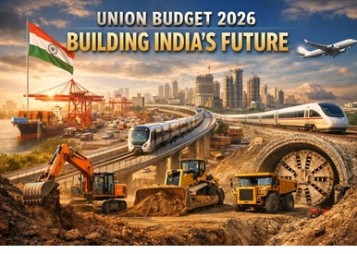
Union Budget 2026–27: Re-Engineering India’s Infrastructure Growth Story
Union Budget 2026–27: Re-Engineering India’s Infrastructure Growth Story
The Union Budget 2026–27 marks a decisive moment in India’s infrastructure journey. Rather than relying on headline numbers alone, the Budget delivers a strategic recalibration of how infrastructure is financed, executed, and scaled, reinforcing its role as the backbone of India’s long-term economic growth.
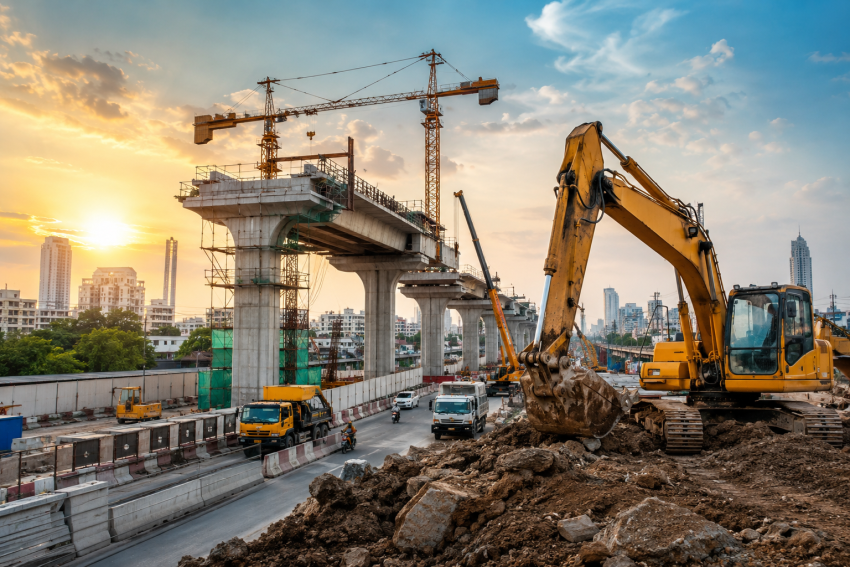
With capital expenditure raised to ₹12.2 lakh crore, the government has once again signalled that infrastructure remains its most credible growth lever—one that creates jobs, crowds in private investment, and improves national competitiveness.
But the real story of this Budget lies beyond the capex number.
From Spending More to Spending Smarter
A clear shift is visible in this year’s approach: infrastructure is no longer treated as a standalone expenditure item, but as productive capital with measurable outcomes. The emphasis is on:
Faster execution
Network efficiency over asset accumulation
Risk-sharing with private capital
Long-term asset sustainability
This evolution reflects maturity in India’s infrastructure planning.
Transport & Logistics: The Efficiency Pivot
Roads, railways, freight corridors, and waterways continue to receive strong policy backing, but with a sharper focus on integration rather than expansion alone. New freight corridors, high-speed rail links, and inland waterways aim to reduce logistics costs, ease congestion, and strengthen supply chains.
The objective is clear: move goods and people faster, cheaper, and more reliably—a prerequisite for manufacturing growth and export competitiveness.
States Take Centre Stage
An important structural theme in Budget 2026–27 is the enhanced role of states. Continued interest-free funding and execution-linked incentives reflect confidence in decentralised infrastructure delivery. States that can move quickly on land, approvals, and project readiness are being empowered to become growth engines in their own right.
This approach not only accelerates project implementation but also deepens regional economic development.
Construction Equipment: A Quiet but Strategic Boost
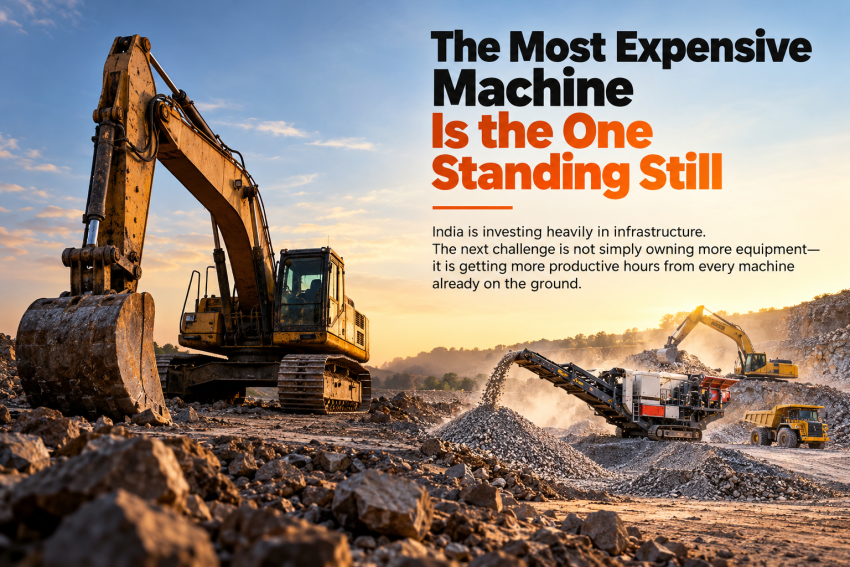
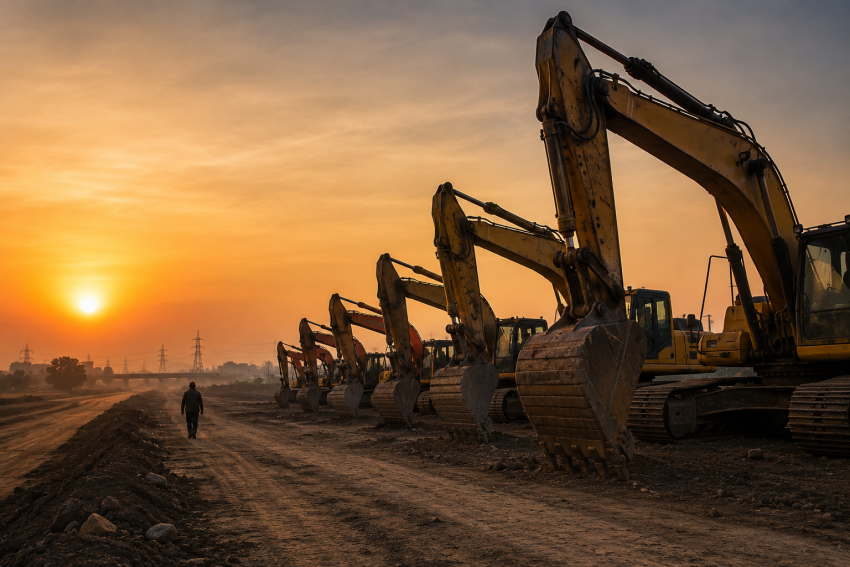
For the first time, the Budget explicitly acknowledges the construction and infrastructure equipment ecosystem as a critical enabler of project execution. A new policy push to strengthen domestic manufacturing of advanced construction equipment reduces import dependence, improves availability, and supports faster on-ground delivery.
Combined with sustained infrastructure activity, this creates a strong demand outlook for equipment ownership, rentals, and aggregation models, particularly in Tier-2 and Tier-3 markets.
Green and Digital Infrastructure Go Mainstream
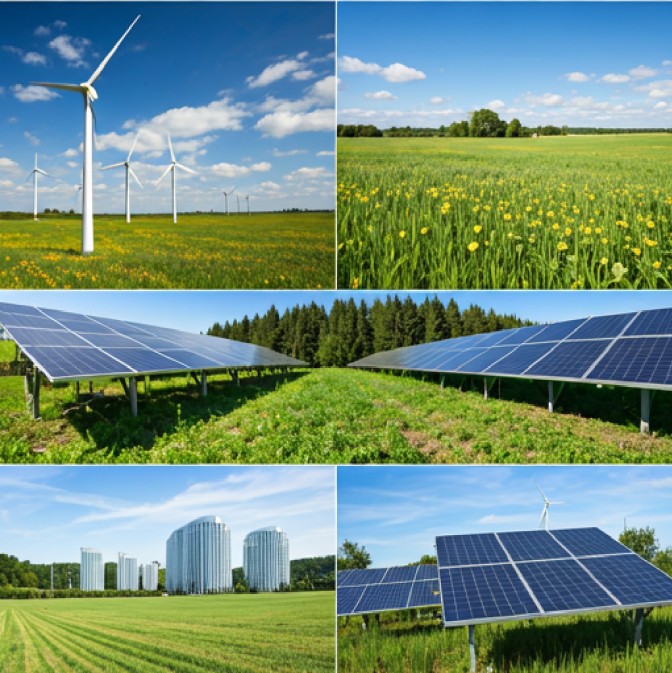
Budget 2026–27 firmly integrates green and digital assets into core infrastructure planning. Investments in renewable energy systems, EV charging, battery storage, green hydrogen, data centres, and digital networks reflect a long-term view where sustainability and productivity go hand in hand.
This convergence of physical and digital infrastructure is critical for building a future-ready economy.
Asset Monetisation: Financing Without Fiscal Stress
The renewed emphasis on asset recycling and monetisation—using REITs and structured platforms—demonstrates fiscal discipline. By unlocking value from mature assets and redeploying capital into new projects, the government is expanding infrastructure without compromising balance-sheet stability.
This also deepens private sector participation and improves asset management standards.
What This Means for the Infrastructure Ecosystem
The Budget provides multi-year visibility across the value chain:
EPC and construction companies gain execution confidence
Equipment manufacturers and rental platforms see sustained utilisation
Logistics, ports, and warehousing benefit from integrated planning
Infrastructure investors gain clarity on risk mitigation and returns
More importantly, it reinforces infrastructure as a long-duration investment theme, not a cyclical policy tool.
The Big Picture
Union Budget 2026–27 is not about dramatic announcements—it is about continuity with conviction. By combining higher public investment with smarter execution, private capital participation, and fiscal prudence, the Budget strengthens infrastructure as the foundation of India’s growth architecture.
Infrastructure today is no longer just about building assets.
It is about building confidence, capacity, and competitiveness for the next decade.
Most Popular