Global Uncertainty, India’s Moment: The Infrastructure Boom Reshaping Business and the Construction Economy
Global Tensions, Domestic Momentum: What Current Affairs Mean for Indian Business and Infrastructure
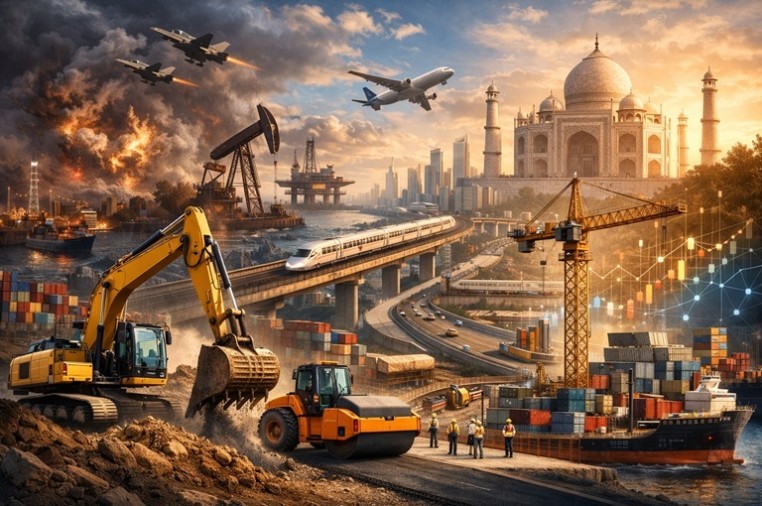
The global economic and geopolitical landscape is passing through one of its most volatile phases in recent decades. Wars in the Middle East, fragile supply chains, rising protectionism, and shifting global alliances are reshaping the economic architecture of the world. Yet amid this turbulence, India finds itself in a rare strategic position—poised not merely to withstand the shocks but potentially to emerge stronger.
For Indian businesses, infrastructure developers, and the construction equipment ecosystem, the current global environment presents a complex mix of risks and opportunities.
A World in Conflict, A Market in Transition
The ongoing tensions involving the United States, Israel and Iran have once again reminded the world how fragile energy security can be. Oil prices react instantly to geopolitical developments in the Gulf region. For India, which imports nearly 85% of its crude oil requirements, this volatility directly impacts inflation, logistics costs, and industrial margins.
However, India today is far better prepared than it was a decade ago. Strategic petroleum reserves, diversified sourcing, and stronger macroeconomic management have improved resilience. Even more importantly, India’s domestic growth engine—driven largely by infrastructure spending—is powerful enough to absorb some of these shocks.
Infrastructure: The Core Engine of India's Growth
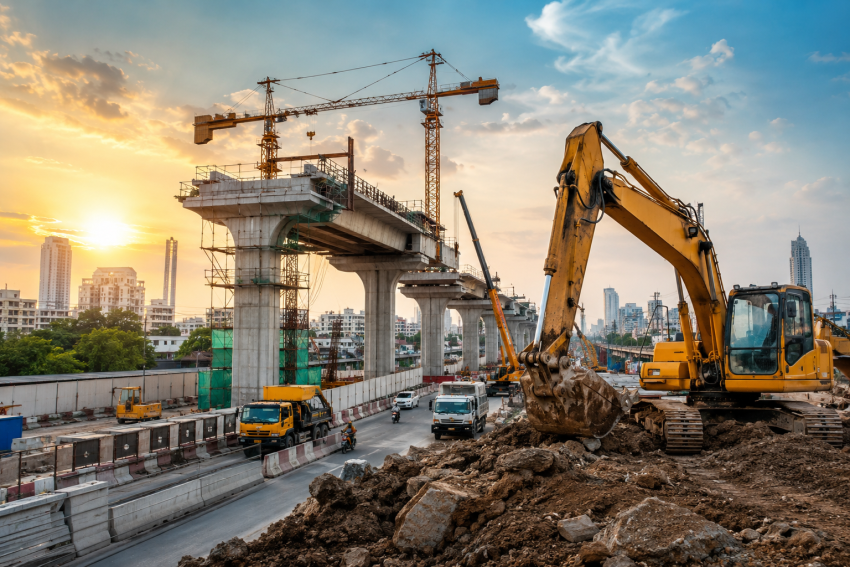
India’s infrastructure push has become the central pillar of its economic strategy. Massive investments in highways, rail corridors, logistics parks, ports, renewable energy, and urban infrastructure are transforming the physical backbone of the country.
The government’s capital expenditure has increased significantly in recent years, with infrastructure spending crossing ₹10 lakh crore annually. Projects under initiatives such as Bharatmala, Sagarmala, Dedicated Freight Corridors, and large renewable energy parks are generating enormous demand for construction equipment and engineering services.
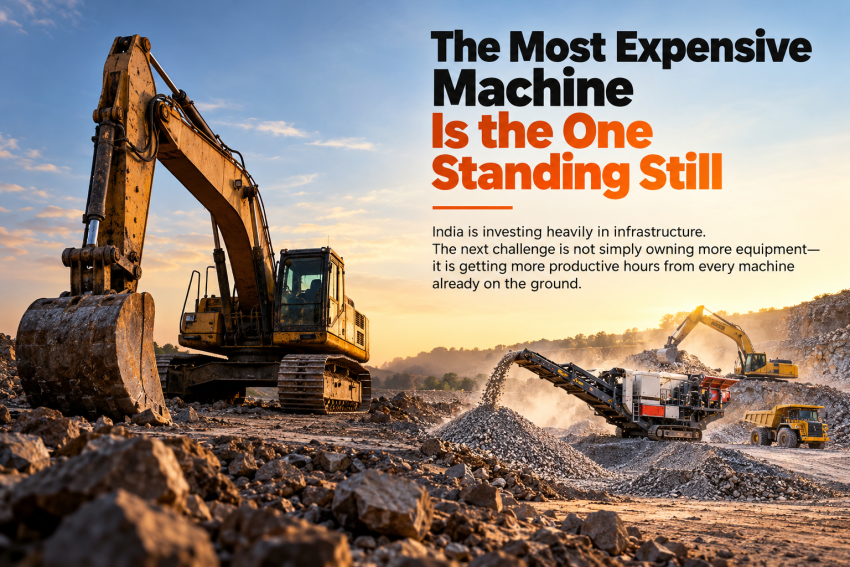
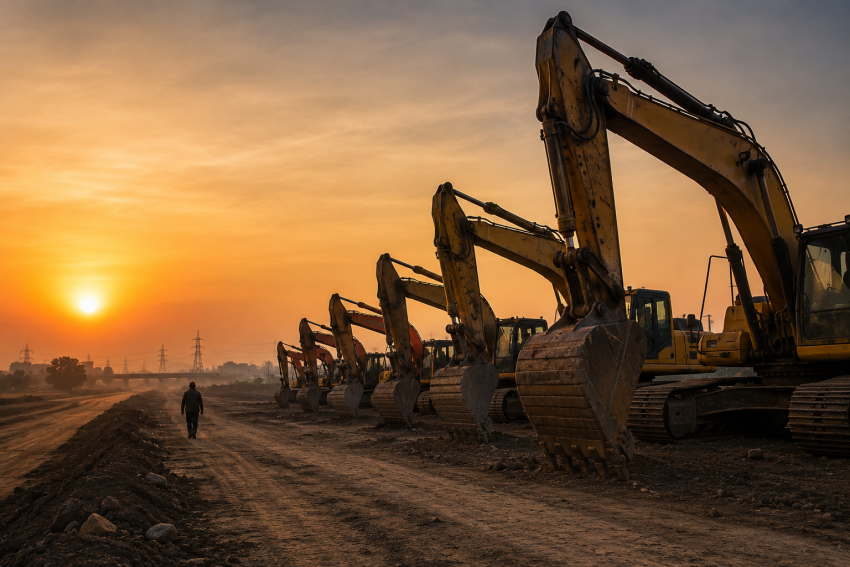
For the construction equipment industry, this is a defining decade. Excavators, loaders, cranes, dumpers, batching plants, and road construction machinery are witnessing sustained demand across states.
Rental markets are also expanding rapidly as contractors increasingly prefer asset-light models. Digital platforms, equipment aggregation models, and professional rental ecosystems are gradually replacing informal networks.
The Rise of the Equipment Ecosystem
India’s construction equipment sector is currently valued at roughly $7–8 billion and is expected to double within this decade.
Several structural factors are driving this growth:
Massive government infrastructure investment
Expansion of mining and mineral extraction
Renewable energy infrastructure
Urban metro rail projects
Logistics and warehousing development
Another significant shift is the professionalisation of equipment ownership. Large contractors now prefer renting equipment rather than owning entire fleets. This has created a new business opportunity—equipment aggregation platforms, rental marketplaces, and digital procurement systems.
Platforms that connect equipment owners, contractors, and spare parts suppliers are likely to play a crucial role in this evolving ecosystem.
Supply Chains and the China+1 Opportunity
One of the most profound global economic shifts underway is the diversification of supply chains away from China.
Many multinational companies are actively adopting the “China +1” strategy, seeking manufacturing bases in countries that offer scale, political stability, and cost competitiveness. India is emerging as one of the strongest contenders in this transition.
This shift has implications beyond manufacturing. Industrial corridors, logistics parks, port capacity, and freight networks will require massive expansion to support this transition.
Each new industrial cluster creates a ripple effect of demand for roads, utilities, construction equipment, and logistics infrastructure.
The Capital Markets Signal Confidence
Despite intermittent corrections, Indian capital markets continue to show long-term confidence in the infrastructure story. Investors increasingly recognise that India is entering a multi-decade investment cycle similar to what China experienced in the early 2000s.
Companies in sectors such as engineering, construction, capital goods, and defence manufacturing are receiving renewed investor attention.
At the same time, investors are becoming more selective. Businesses with strong execution capabilities, transparent governance, and scalable models are attracting capital far more easily than those dependent purely on government contracts.
The Strategic Role of Digital Platforms
Another silent transformation underway in the infrastructure ecosystem is digitisation.
From equipment rentals to spare parts procurement, from project monitoring to contractor marketplaces, digital platforms are increasingly integrating fragmented supply chains.
The construction sector—traditionally slow in adopting technology—is gradually embracing data-driven procurement and asset utilisation models.
Digital equipment marketplaces could potentially bring transparency, efficiency, and scale to an industry that historically operated through local networks and informal relationships.
Risks That Cannot Be Ignored
While the long-term outlook remains strong, several risks remain.
Rising commodity prices, particularly steel and fuel, can significantly impact project costs. Global conflicts may also disrupt shipping routes and supply chains.
Interest rates remain another variable to watch. Infrastructure projects are capital-intensive and sensitive to financing costs.
Additionally, execution capacity remains a challenge. India’s ability to deliver projects on time and within budget will determine how effectively the infrastructure push translates into economic growth.
The Road Ahead
Despite global uncertainty, India’s economic trajectory appears structurally strong. The country is entering a phase where infrastructure investment, manufacturing expansion, and digital innovation are reinforcing each other.
For businesses operating in construction equipment, logistics, infrastructure development, and industrial supply chains, the coming decade could represent one of the most significant growth cycles in modern Indian history.
The world may be uncertain, but India’s development story is gathering momentum.
And in that story, infrastructure will remain the foundation on which the nation’s next phase of economic growth is built.
Most Popular