The Invisible War Hitting Indian Infrastructure
The Invisible War Hitting Indian Infrastructure
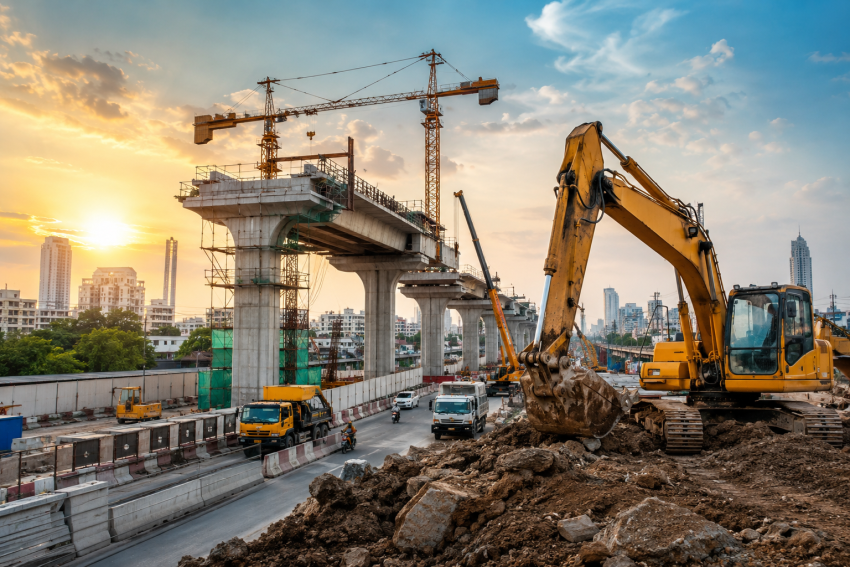
India’s infrastructure sector is facing a paradoxical moment. On paper, the country is entering its biggest capex cycle ever — highways, railways, metros, data centers, logistics parks, renewable energy, mining expansion and urban redevelopment are all accelerating simultaneously. Government-led infrastructure investments continue to remain the backbone of India’s growth strategy.
But on the ground, a quieter and more dangerous reality is emerging.
The next infrastructure slowdown may not come from lack of projects.
It may come from geopolitics.
The ongoing Iran conflict and disruption around the Strait of Hormuz are no longer just “global news headlines.” They are now directly influencing the economics of Indian roads, construction equipment, logistics, steel, cement, mining and EPC execution. Nearly 20% of global oil movement passes through Hormuz, and prolonged disruption has already pushed energy markets into what the IEA calls the “red zone.”
For India — one of the world’s largest energy importers — this creates a cascading impact.
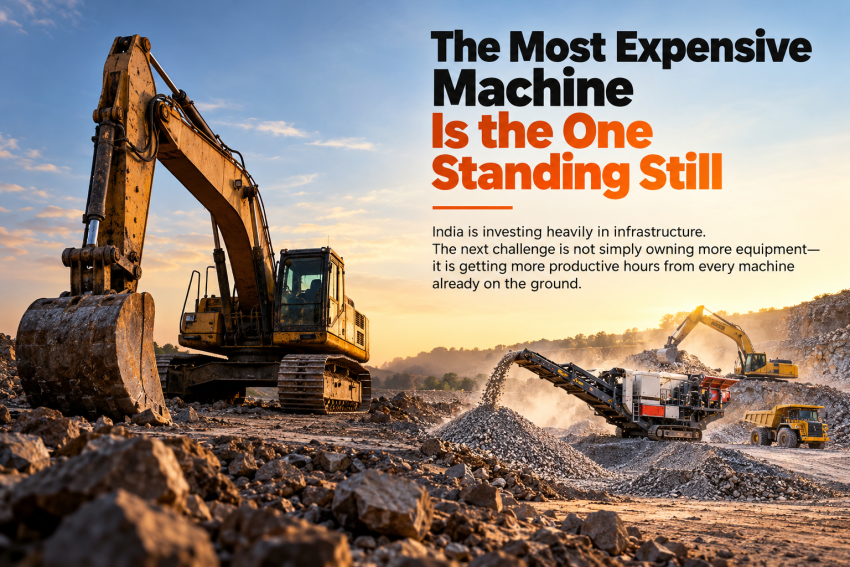
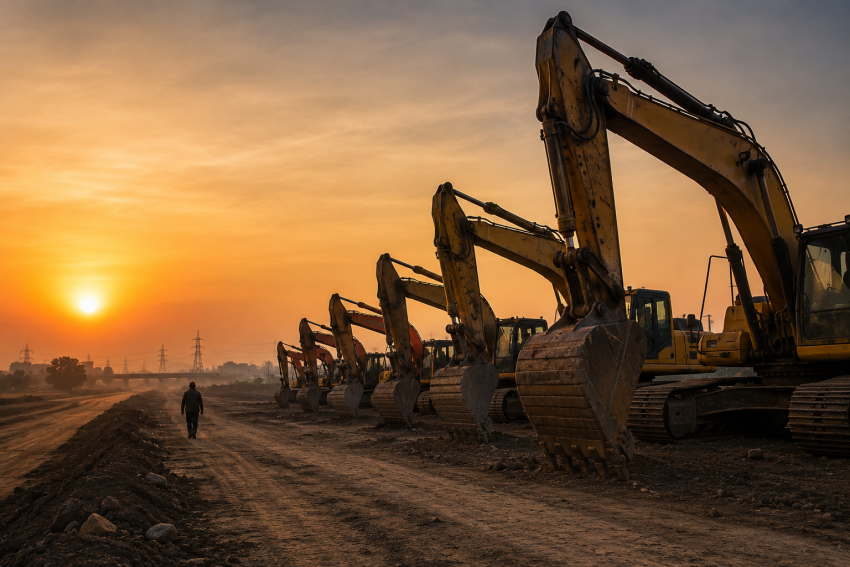
Higher crude prices immediately translate into higher diesel costs. And diesel is the bloodstream of infrastructure execution. Excavators, dumpers, crushers, batching plants, generators, logistics fleets, mining equipment and road construction machinery all run on fuel. Every ₹10 increase in diesel impacts project economics far beyond transport costs. It raises earthmoving costs, freight rates, quarry operations, mobilization expenses and even labor movement costs.
The first visible cracks are already appearing.
India is reportedly facing a severe bitumen shortage because of the West Asia conflict, with VG-40 prices nearly doubling and road project execution coming under pressure.
This matters more than it appears.
Road construction is the single largest multiplier for equipment demand in India. If bitumen supply tightens, EPC contractors slow execution. When execution slows, equipment utilization falls. When utilization falls, rentals weaken, payments get delayed, refinancing stress rises and secondary equipment markets soften.
In other words — geopolitics in West Asia can quietly impact excavator utilization in India.
Simultaneously, steel and cement producers are entering a difficult zone. Infrastructure demand remains structurally strong, but input costs are becoming volatile. Freight inflation, imported energy costs and currency pressure are beginning to squeeze margins. India’s infrastructure output still grew in April, supported by cement and steel demand, but broader core sector growth has moderated.
The bigger concern is timing.
Infrastructure companies can survive high costs.
What they struggle with is uncertainty.
When oil moves from $75 to $105 unpredictably, project costing assumptions collapse. EPC contracts signed six months earlier suddenly become unviable. Contractors begin slowing procurement. Banks become cautious on fresh disbursements. Private capex decisions get deferred.
This is how slowdowns actually begin — not with announcements, but with hesitation.
And yet, there is another side to this story.
India may also emerge stronger from this crisis.
Historically, every major geopolitical energy shock has forced nations to rethink resilience. Europe accelerated renewables after the Russia crisis. China doubled down on supply-chain control. India may now accelerate domestic manufacturing, rail freight corridors, LNG diversification, renewable infrastructure and strategic energy storage faster than expected.
The current crisis could become India’s “infrastructure independence moment.”
Already, the government’s capex-led growth model is designed precisely to counter global weakness. With private consumption uneven and exports vulnerable to global volatility, infrastructure spending remains India’s most powerful economic stabilizer.
But execution discipline will now matter more than announcements.
The winners of the next cycle may not necessarily be the largest contractors — but the most efficient ones:
Companies with fuel-efficient fleets
Asset-light rental models
Strong balance sheets
Faster project turnover
Lower logistics dependency
Better refinancing access
Technology-driven fleet management
The age of easy infra growth may be ending.
The age of efficient infra growth is beginning.
And perhaps that is the biggest story nobody is discussing yet:
India’s infrastructure future may no longer be decided only by Delhi’s budgets — but also by oil routes near Iran, shipping insurance in the Gulf, commodity volatility in global markets and the geopolitical battle for energy security.
The next infrastructure cycle will not just be built with steel and concrete.
It will be built with resilience.
Most Popular