India’s Economic Crossroads: What Will Make or Break the Next Decade?
India’s Economic Crossroads: What Will Make or Break the Next Decade?
India’s Economic Crossroads: What Will Make or Break the Next Decade?
India has the potential to remain one of the world’s fastest-growing major economies. The real test is whether that growth can create productive jobs, raise household incomes and withstand shocks from energy prices, climate and global trade.
India’s economy is showing strength at a time of considerable global uncertainty. The Reserve Bank of India (RBI) reported real GDP growth of 7.8% in the first quarter of FY 2026–27 and raised its growth projection for the full financial year to 7.1%. Investment and manufacturing have supported that momentum. At the same time, higher food and fuel prices are putting pressure on households and businesses. The RBI raised its policy repo rate to 5.50% in October and forecast FY27 inflation at 5.2%.
That combination captures India’s economic crossroads: growth is strong, but the conditions that sustain it are under pressure. The question is no longer only how quickly the economy can expand. It is whether expansion can become more productive, create enough quality employment and remain resilient when external conditions turn against it.
1. Growth must translate into broad-based demand
Economic growth is most durable when households have the income and confidence to spend. Consumption supports businesses, while businesses invest when they see reliable demand. If incomes lag behind output, growth can become concentrated in a few sectors and lose momentum across the wider economy.
Employment is central to that equation. The latest annual Periodic Labour Force Survey reported that agriculture still accounted for 43% of employment in 2025, while manufacturing accounted for 12.1%. The share of workers in regular wage or salaried jobs rose to 23.6%, from 22.4% in 2024. These figures point to gradual change, but also to the scale of the task: India needs more productive work in manufacturing and modern services, alongside better earnings and stability for workers.
The success of India’s growth model will depend on whether people can move into jobs that raise productivity and purchasing power. That requires firms to grow, workers to gain relevant skills, and more women to be able to enter and remain in paid work.
2. Inflation and energy costs are a test of economic resilience
India’s exposure to imported energy makes it vulnerable to disruptions in global oil markets. When crude prices rise, the effects can spread through transport, manufacturing, construction, food distribution and household budgets. Higher import costs can also put pressure on the rupee and the country’s external balance.
This risk is visible now. Brent crude was above $110 a barrel on October 22 amid escalating Middle East tensions. India’s retail inflation rose to 5.54% in September, with food inflation at 7.74%. The RBI’s October policy statement cited food and fuel as key contributors to the inflation outlook and raised the repo rate.
If the energy shock persists, businesses may face higher input and financing costs at the same time. That can delay investment and weaken demand. India’s response will need to combine careful monetary policy with stronger energy security, more efficient use of fuel, diversified supply and faster development of domestic energy sources.
3. Public investment has to bring private investment with it
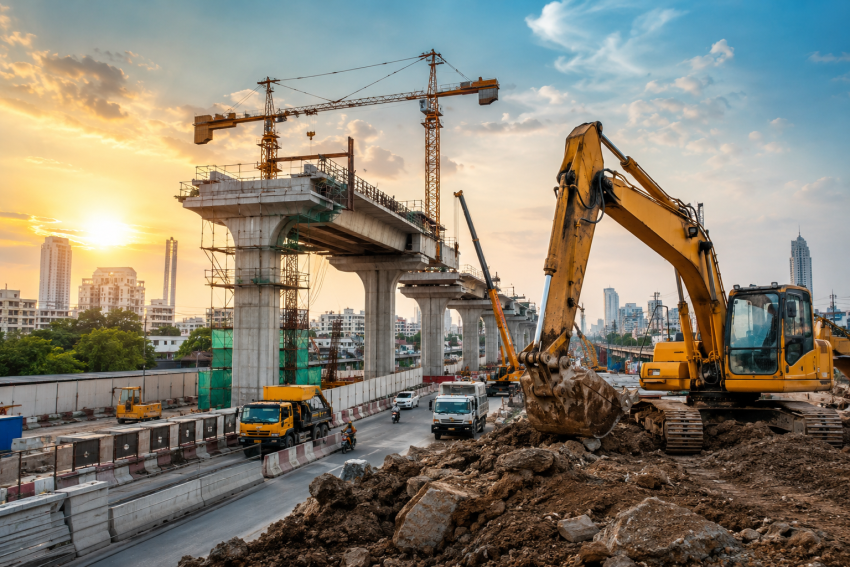
Investment in roads, railways, ports, power, logistics and urban infrastructure can reduce the cost of doing business and open new markets. It can also create demand for equipment, materials and services. The challenge is to turn public investment into a wider private investment cycle, where companies expand capacity because they see projects, customers and reliable returns.
The RBI reported that gross fixed capital formation was 34.3% of GDP in Q1 FY27, compared with 31.4% in the same quarter a year earlier. September’s index of eight core industries grew 7.9% year-on-year, although some of that increase reflected a favourable base and output was uneven across industries. These are encouraging signs, but sustained gains will depend on project execution and on private firms investing beyond a small group of sectors.
The next stage of growth requires capital to reach productive businesses of different sizes. Predictable rules, timely payments, access to finance and stable demand matter as much as headline investment announcements. Infrastructure should connect regions and firms to opportunity, while investment in equipment and technology should improve output per worker.
4. Export growth will depend on competitiveness, not just market access
A more difficult global environment is changing trade. Geopolitical tensions, protectionist policies and supply-chain shifts can create opportunities for Indian producers, but they also make access to markets less predictable. UNCTAD projects global economic growth of 2.6% in 2026, while projecting India’s growth at 7.3%. Its report also notes the role of energy shocks and geopolitical uncertainty in weighing on the world economy.
India’s opportunity is to become a more reliable source of goods and services for global markets. That calls for competitive logistics, consistent product quality, efficient ports, skilled labour and firms able to meet international standards. Trade agreements can help, but they cannot replace productivity and competitiveness at home.
Export performance must also be judged alongside imports. A higher oil bill, for example, can absorb gains from stronger exports. Diversifying exports and reducing avoidable energy dependence would make India’s external position more resilient.
5. Agriculture and climate resilience are macroeconomic issues
Agriculture remains a large employer and a major influence on food prices. Erratic rainfall, heat, water stress and changing crop patterns can affect farm incomes and food supply. When food prices rise, households feel the impact quickly, and inflation becomes harder to manage.
Improving agricultural productivity is therefore both a rural development priority and a matter of national economic stability. Better irrigation, storage, transport, crop diversification and access to timely market information can reduce losses and smooth supply. Climate resilience must be built into infrastructure and business planning, not treated as a separate environmental concern.
6. Skills, technology and productivity will determine the quality of growth
India’s demographic scale is an advantage only when people can participate productively in the economy. Training needs to match the work employers are creating, from advanced manufacturing and logistics to healthcare, construction, finance and digital services. Technology and AI can raise productivity, but the gains will depend on whether firms adopt them effectively and workers can adapt.
Small businesses also need the capacity to grow. Better access to finance, digital tools, formal markets and skilled employees can help them become more productive and create more stable jobs. The aim should be to help businesses expand—not just to increase the number of enterprises.
What could make or break India’s economic trajectory?
|
The growth opportunity |
What could put it at risk |
|---|---|
|
Productive jobs and rising wages |
Growth that does not translate into broad household income gains |
|
Infrastructure and private investment |
Projects that are delayed, poorly connected or unable to attract follow-on investment |
|
Competitive exports and new markets |
Trade barriers, high logistics costs and weak productivity |
|
Stable prices and a resilient rupee |
Imported energy shocks and persistent food inflation |
|
A skilled, healthy workforce |
Skills that do not match the jobs being created, or barriers to women’s employment |
|
Technology adoption and innovation |
Productivity gains concentrated in a few firms or sectors |
|
Agricultural productivity and food security |
Climate stress, low farm productivity and supply disruptions |
|
Fiscal capacity for long-term investment |
Rising costs that leave less room for productive public spending |
The decisive question
India’s economy has strong foundations: a large domestic market, expanding infrastructure, a growing services base and the capacity to attract investment. But these strengths alone will not guarantee sustained prosperity.
The decisive test is whether India can turn growth into productivity, productivity into better jobs, and better jobs into rising incomes. That will require reliable infrastructure, competitive businesses, stronger skills, stable prices and sound management of energy and climate risks.
India’s next economic chapter will be shaped by the quality of its growth as much as by its pace.
Most Popular